If a pipe has burst. Stay away from standing water near electrical outlets. If you can reach it safely, shut off the affected water supply, then call for emergency plumbing.
Why Rapid City pipes freeze
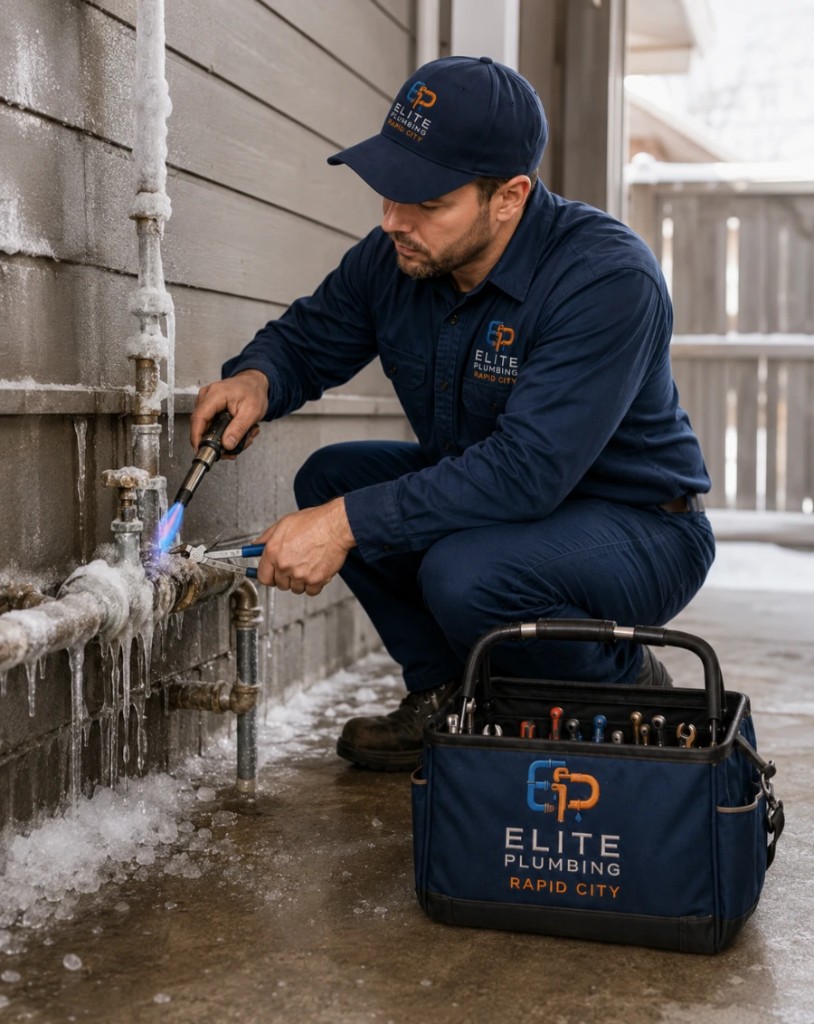
Cold snaps in the Black Hills can drop temperatures well below freezing. Lines in exterior walls, crawl spaces, garages, unheated bathrooms and outdoor hose bibs are the most likely to freeze. A furnace that has stopped running can also leave the rest of the plumbing more exposed.
Signs a line may be frozen
- No water, or only a trickle, from one faucet
- A fixture that worked yesterday and is silent today during a cold spell
- Frost on an exposed pipe
- A sudden leak when the weather warms and ice starts to melt
What to do while you wait
- Open the faucet that is not flowing so pressure can release as ice melts.
- Do not use an open flame, torch or high-heat gun on a pipe.
- If you find a split or water starts spraying, shut the water off if it is safe and call (605) 250-1555.
- Keep people and pets away from wet floors.
More steps for active leaks are on what to do before the plumber arrives.
Repair after a freeze
A freeze can crack a fitting, split a section of pipe or damage a hose bib. Elite Plumbing can inspect the line and discuss water pipe repair. Hidden moisture after a thaw may also need leak detection.
Prevention that actually helps
- Disconnect and drain outdoor hoses before a hard freeze.
- Keep cabinet doors open on kitchen and bath sinks along exterior walls during extreme cold.
- Let a thin stream of water run from a vulnerable faucet during the coldest nights if that fixture has frozen before.
- Call if your heat is out. Plumbing and heating problems often show up together in Rapid City winters.
This page is a winter guide, not a promise that every freeze can be prevented. Call to confirm we can reach your address.